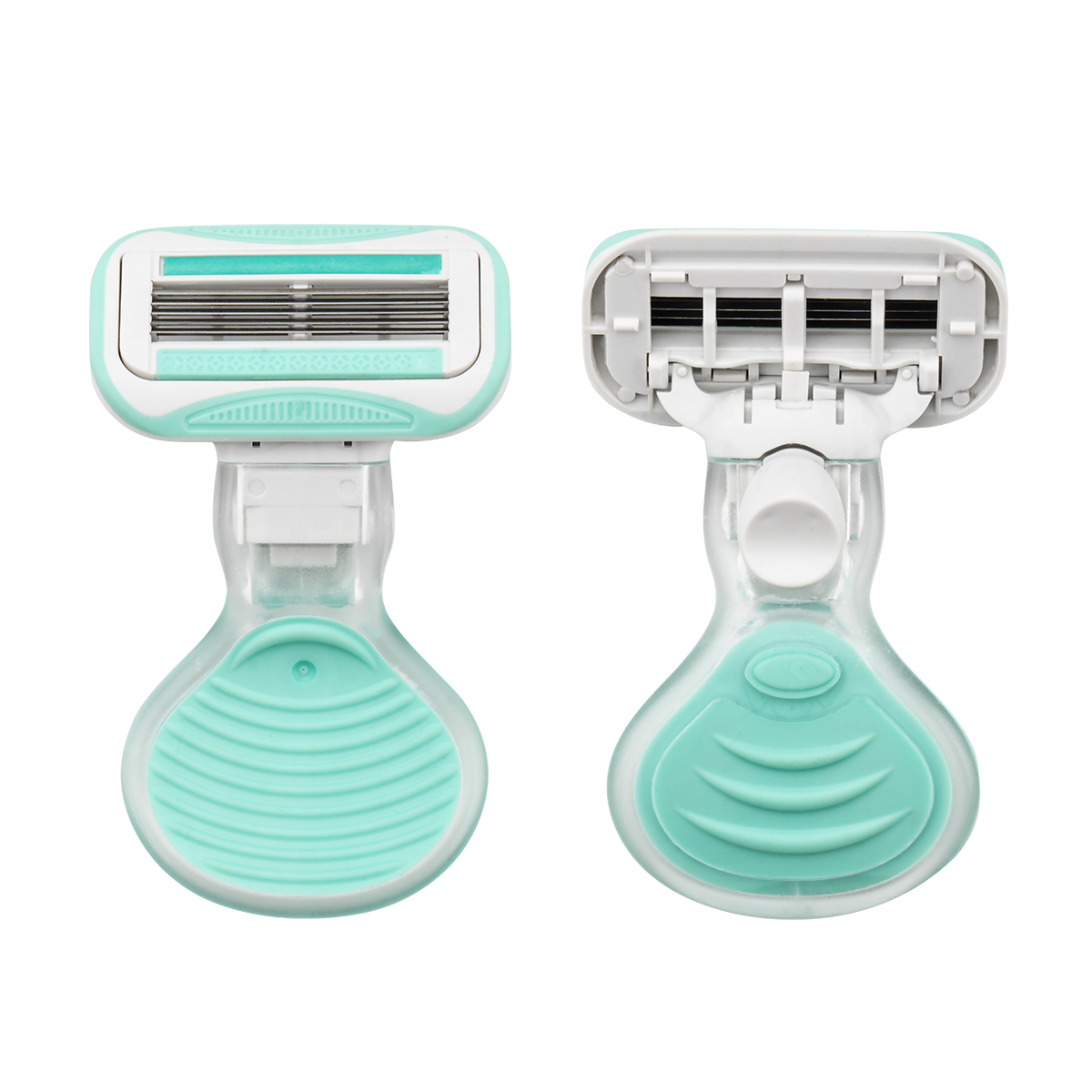
A ribbed, easy-grip handle, a wider aloe lubricating strip, and a free-swiveling head headline the update — built on the factory floor to hold up to daily body shaving without losing precision at the jawline of the leg, knee, or underarm.
Our production line has shipped its first full batch of the redesigned razor, a three-blade cartridge model built specifically around how women actually shave: longer strokes down the shin, tight turns around the ankle and knee, and repeat passes through the underarm and bikini line where a men's razor's flat, stiff handle tends to fight the skin instead of following it.
The brief from our design team was simple: keep the blade cartridge itself close to industry-standard triple-blade geometry, since that's the part that actually does the cutting, and spend the redesign budget on everything a men's razor gets wrong for this use case — grip, pivot range, and how the handle sits in a wet hand. That's really the honest answer to a question our customer service team hears constantly: are women's razors better than men's razors, or is it the other way around? Neither. The blades are close cousins. The difference that matters lives in the handle.
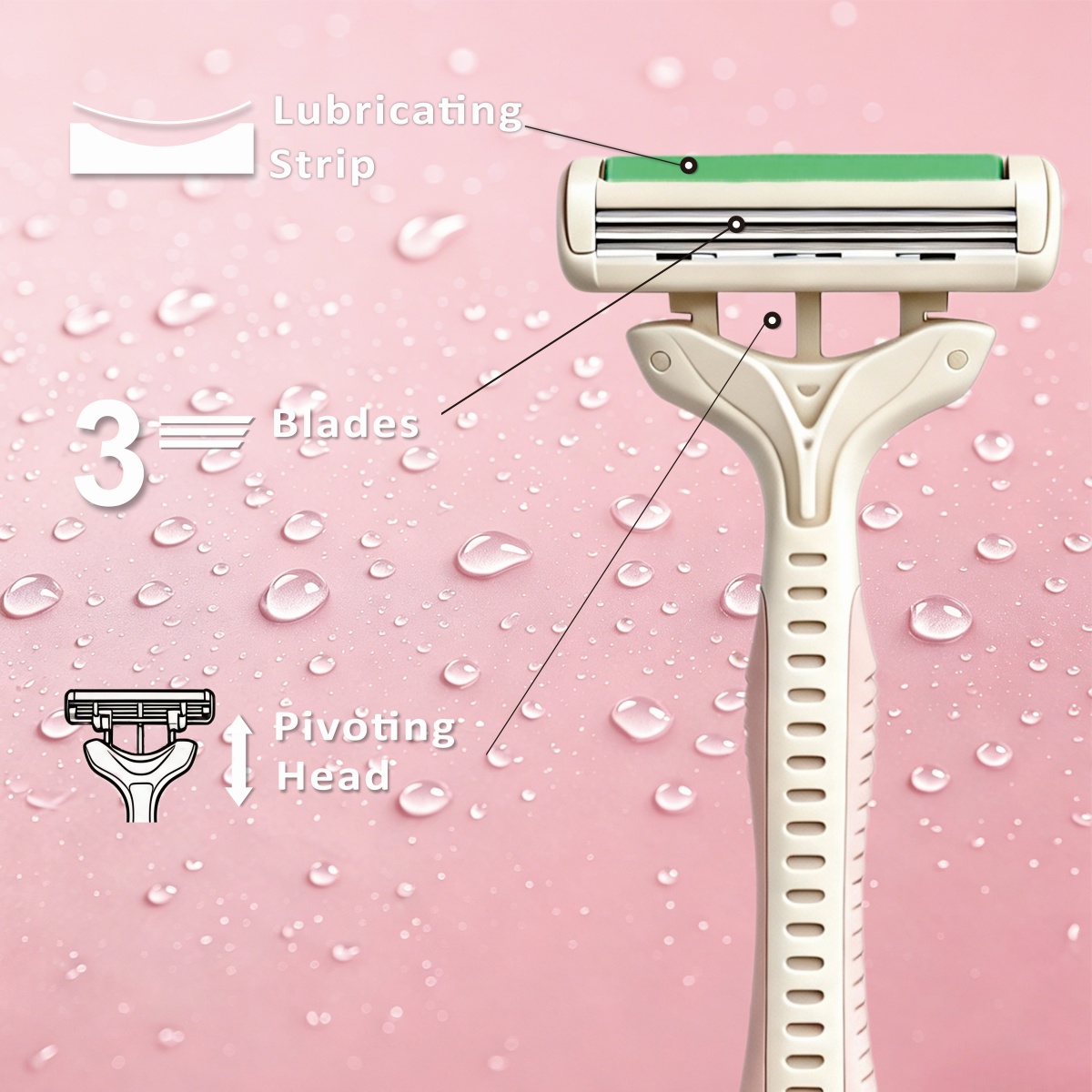
Each cartridge carries three stainless steel blades set at a fixed progressive angle, so the first blade lifts hair away from the skin and the last two finish the cut without a second pass. Above the blade stack sits a wider lubricating strip that softens as it meets warm water, cutting down on the tugging that shows up most on drier skin around the knees and ankles.
Below the cartridge, the head is mounted on a spring-loaded pivot rather than fixed to the neck. That single change is what lets the razor track a kneecap or ankle bone without the operator having to constantly re-angle the handle — the head does that work on its own, which is exactly the ergonomic gap a straight men's razor handle tends to leave unaddressed for this kind of shaving.
"We didn't redesign the blade — we redesigned everything the hand touches. That's the part of a razor that actually differs by who's holding it." — Product Engineering Team
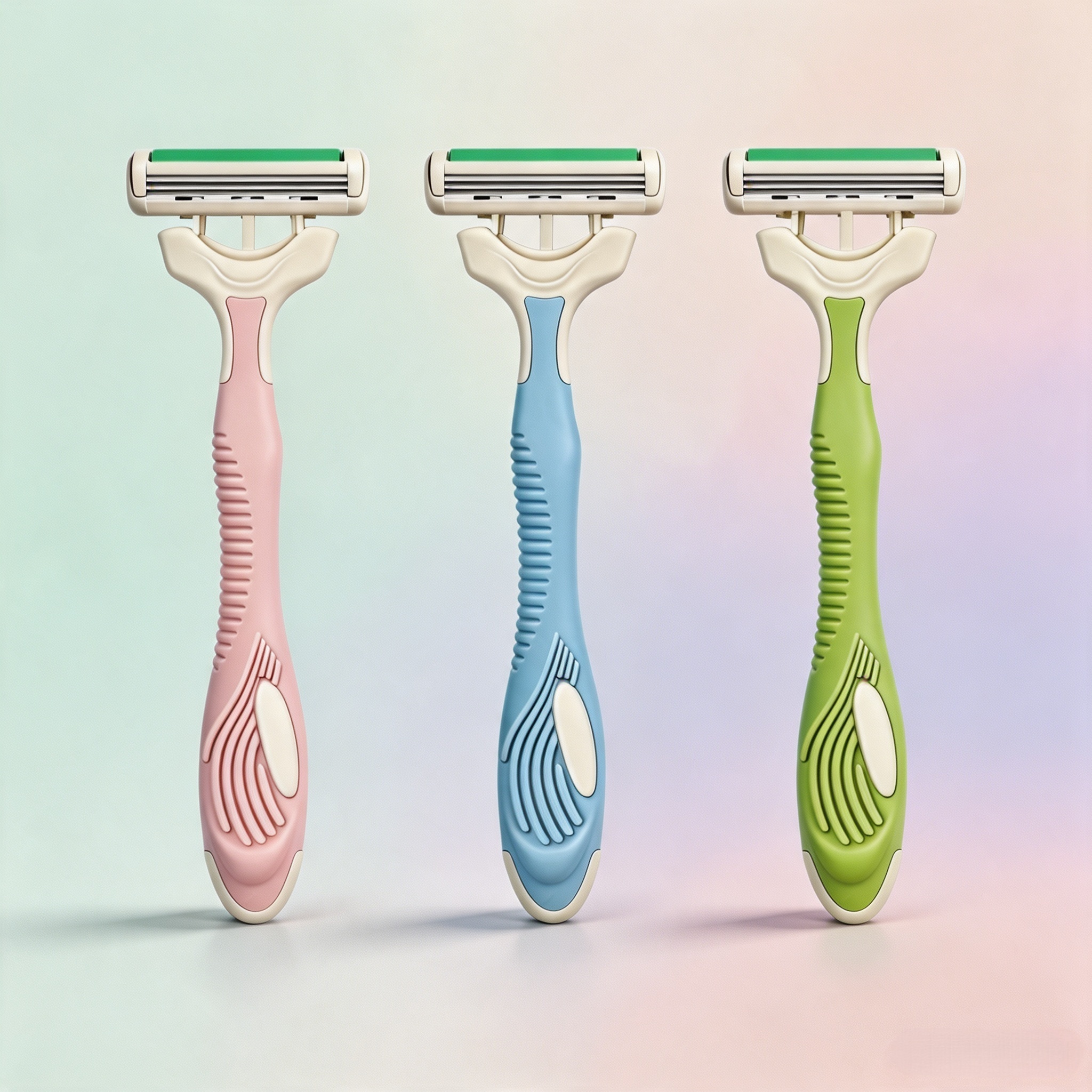
Three color options — blush pink, sky blue, and moss green — share one handle mold with a molded finger rest, a ribbed thumb channel for grip in the shower, and a curved lower grip pad shaped for a smaller hand span. It's a deliberately different approach from the straight, wide-diameter handles typical of men's razors, which are built for a flat cheek and jaw rather than the curved, narrower surfaces most women's razors are asked to shave. Neither shape is objectively "better" outside of context — the honest comparison is that men's razors are optimized for a flat plane and a short stroke, while a dedicated women's razor is optimized for longer strokes over curved, contoured skin.
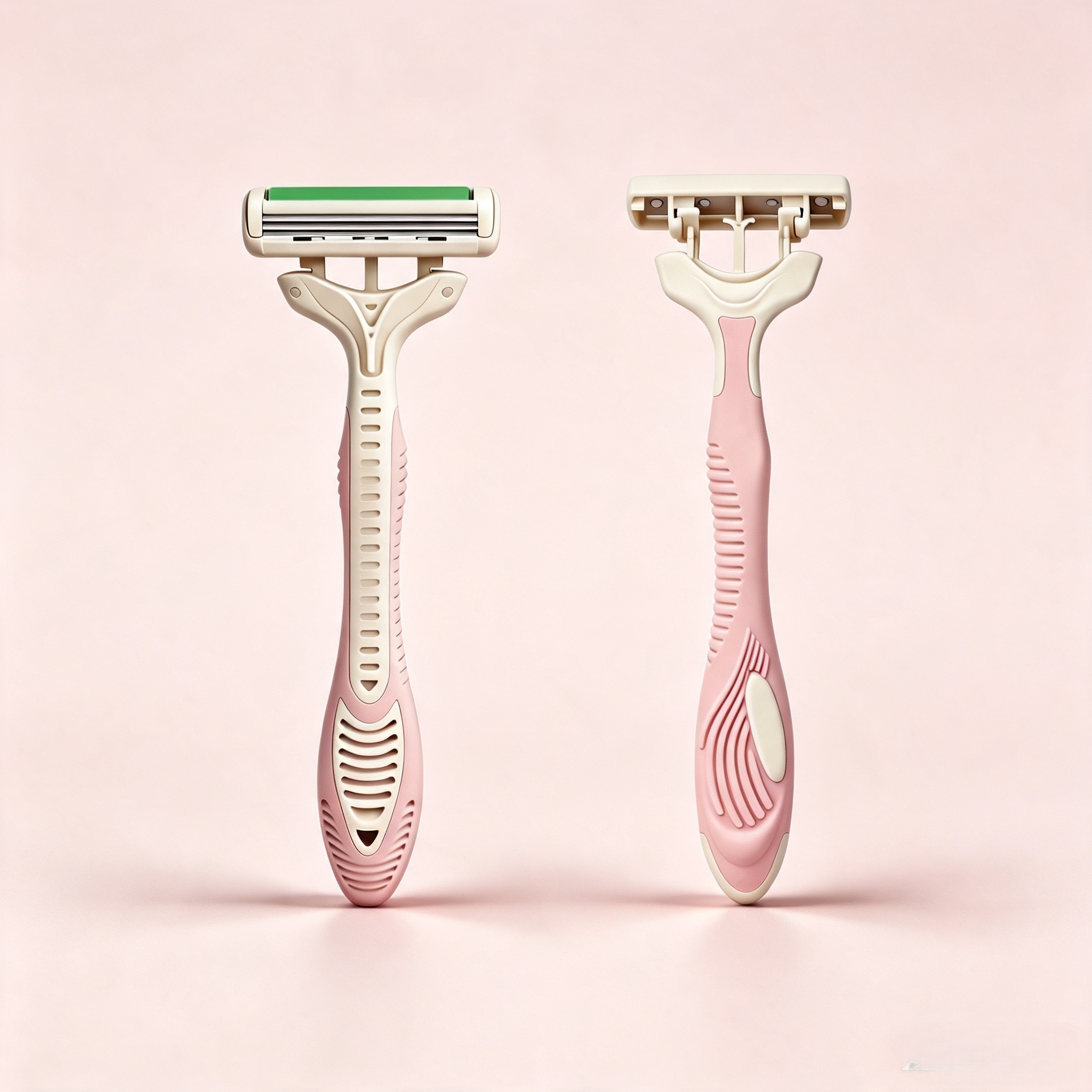
Two grip patterns, one handleA ribbed upper channel for control near the cartridge, and a smooth curved lower pad sized for a narrower hand — both molded in a soft-touch finish that stays grippy when wet.
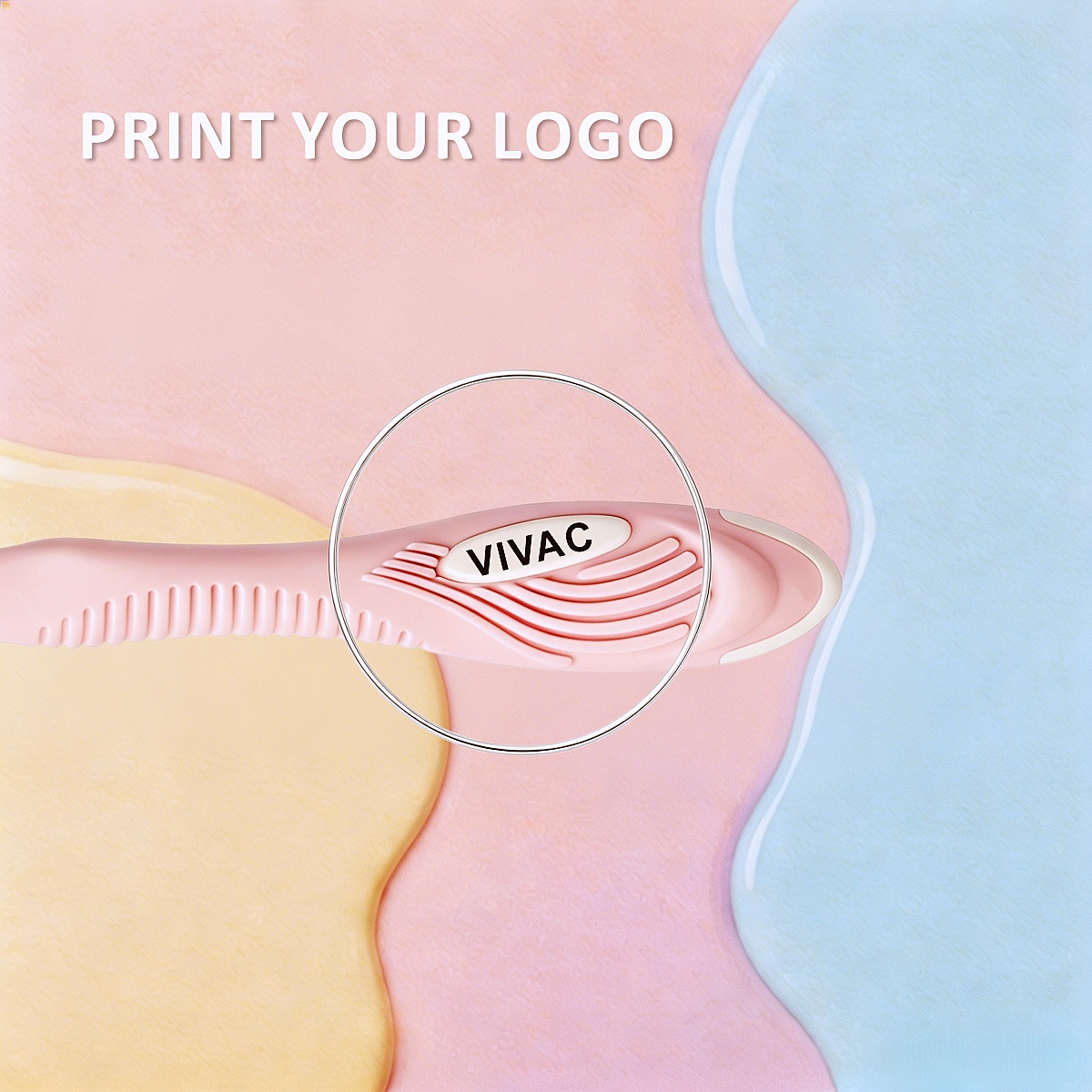
Branding built into the moldThe lower grip pad doubles as a nameplate. Retail and private-label partners can have their own mark debossed in the same spot shown here (sample mark obscured), no extra tooling pass required.
Our customer support inbox gets a fairly consistent set of questions about women's razors, whatever the brand on the handle. We've put the most common ones here, answered the way we'd answer them over the phone.
How often should you change a women's razor cartridge?
For most people, a cartridge holds a clean edge for about 5 to 8 shaves, or roughly one to two weeks of regular use, before drag and nicks start to increase. Rinsing the blades immediately after each shave and shaking off excess water before storage — rather than leaving the cartridge wet in a shower caddy — is the single biggest factor in getting the full lifespan out of a blade. If you're shaving daily or shaving coarser hair, expect to replace closer to weekly.
Are women's razors better than men's razors, or is it the reverse?
Neither is universally better — they're built for different jobs. A men's razor handle is typically straight, wider in diameter, and matched to short strokes over a mostly flat face. A women's razor, including this model, is built around a pivoting head, a narrower ribbed handle, and a lubricating strip sized for longer strokes across curved, larger skin surfaces like the legs. Blade sharpness and cut quality between the two are largely comparable; the meaningful difference is ergonomic.
How do you remove the blade cartridge from a women's razor?
On a cartridge-style razor like this one, the head is not designed to be disassembled by the user — the blades are sealed into the cartridge at the factory for safety, and only the whole cartridge is meant to come off. To release it, most models use a small side or top tab: press or slide that tab while pulling the cartridge straight up and away from the handle's prongs. If a razor has no visible release tab, it's usually a snap-fit design, and it should be replaced as a full cartridge rather than pried apart, since forcing a sealed cartridge open risks exposing the blade edge unpredictably.
What should I look for when comparing women's razors generally?
Beyond blade count, the details that actually change the shaving experience are pivot range, grip material, and the width of the lubricating strip — the same three areas this redesign focused on. A wider strip matters more on drier skin, a pivoting head matters more around joints like the knee and ankle, and grip texture matters most for anyone shaving in the shower rather than at a sink.


 English
 中文简体
中文简体 русский
 Español

 +86-574-87560886/87560055


 No. 2-2, Calle OUfu, Pueblo de Zhangting, Ciudad de Y U scoop, Ciudad de Ningbo, Provincia de Zhejiang, China.
 +86-574-87560885